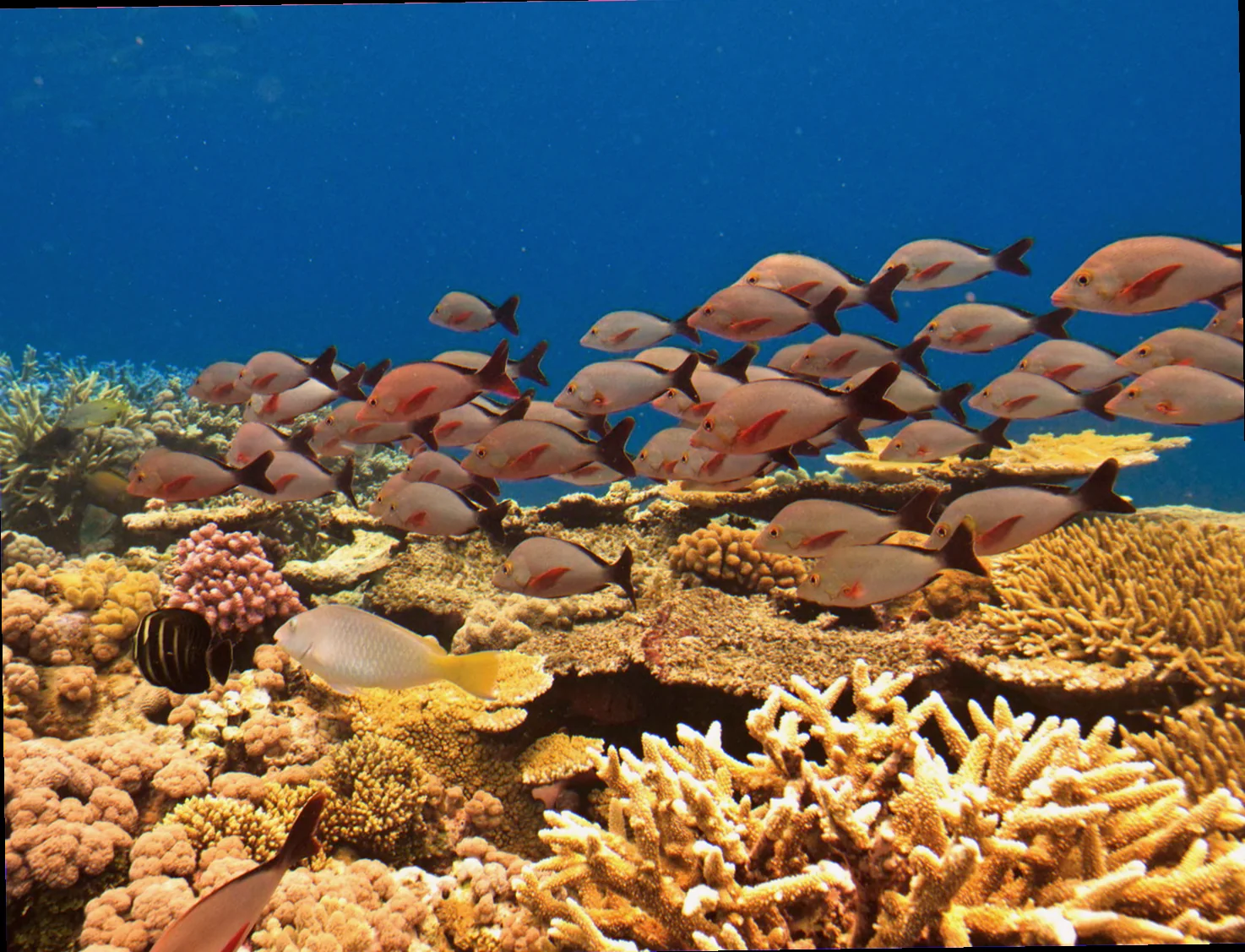
Imagine a world teeming with life, hidden beneath the waves, a vibrant tapestry woven across Australia's vast and ancient seabeds. Did you know that some of the most spectacular underwater cities are built not by humans, but by tiny, hard-working organisms? These "living structures" support an astonishing array of marine creatures, a testament to the incredible biodiversity found right on our doorstep.
Natural History Overview
| Category | Information |
|---|---|
| Scientific name | Corallium rubrum (for precious coral) and associated reef-building organisms |
| Common name variants | Red Coral, Precious Coral; diverse Indigenous names for reef systems and their inhabitants |
| First described (year) | 1758 by Carl Linnaeus (for Corallium rubrum) |
| Size and weight | Individual polyps are microscopic. Reef structures can span kilometres and weigh thousands of tonnes. |
| Longevity record | Individual coral colonies can live for hundreds, even thousands, of years. |
What Makes marine life diversity on australian seabeds Extraordinary
The sheer architectural ingenuity of these underwater communities is what sets them apart. We're not just talking about fish swimming around; we're talking about entire ecosystems built by sessile organisms like corals, sponges, and sea fans. These organisms, often overlooked as mere background scenery, are the architects of complexity. They create intricate three-dimensional habitats with an explosion of nooks, crannies, and surfaces. This habitat complexity is the primary driver of the incredible diversity. Think of it like a bustling city: the more varied the buildings, streets, and parks, the more different kinds of people and businesses can thrive. On the seabed, these structures provide shelter, feeding grounds, and breeding sites for an astonishing variety of life, from the smallest plankton to apex predators. It's a process of biogenic sedimentation, where living organisms literally build the seafloor itself, creating a dynamic and ever-evolving landscape.
Aboriginal and Torres Strait Islander Perspectives
For millennia, Aboriginal and Torres Strait Islander peoples have held deep spiritual and practical connections to the marine environments and the life they support. Many coastal communities have intricate knowledge systems, passed down through generations, detailing the cycles, behaviours, and ecological roles of seabed inhabitants. For some groups, particular species found within these diverse seabed communities are totemic, holding significant cultural and spiritual importance. Traditional practices often involved sustainable harvesting and a profound understanding of the health of these ecosystems, recognising that their own well-being was intrinsically linked to the health of the sea. Lore often speaks of the interconnectedness of all living things, including those that dwell on the seabed, and the importance of respecting and caring for these underwater realms as ancestral country.
Recent Scientific Discoveries (last 20 years)
- Discovery 1: In the last 20 years, advanced genetic sequencing has revealed a staggering number of new species living within seemingly well-studied coral reef systems, with many found only on Australian shores. For example, studies on the Great Barrier Reef have identified hundreds of previously unknown species of molluscs and crustaceans. (Approx. 2010 onwards).
- Discovery 2: Researchers have discovered that some deep-sea corals, living in complete darkness, are able to use bioluminescence not just for communication but also to attract prey, a sophisticated adaptation previously thought to be rare in sessile organisms. (Approx. 2015).
- Ongoing research: Scientists are actively investigating the resilience of different seabed communities to climate change, particularly warming oceans and ocean acidification. This includes exploring the genetic adaptability of corals and the potential for assisted evolution.
Life History and Ecology
- Diet: Primarily filter feeders, drawing plankton and organic particles from the water column. Some species, like anemones and certain sponges, can also capture small invertebrates.
- Habitat: Found across diverse Australian ecosystems including the Great Barrier Reef, Ningaloo Reef, the kelp forests of Tasmania, the seagrass meadows of Shark Bay, and the deep continental shelf slopes.
- Breeding: Many species reproduce sexually, releasing sperm and eggs into the water column during specific lunar cycles. Some also reproduce asexually through budding or fragmentation. Offspring numbers can be in the millions.
- Lifespan: Varies dramatically. Corals can live for centuries, while some smaller invertebrates might only live for a few years.
- Movement: Most seabed organisms are sessile (immobile) as adults. Their larvae, however, are planktonic and can travel for hundreds of kilometres on ocean currents, facilitating dispersal.
Conservation Status and Future Outlook
The conservation status of seabed diversity varies greatly by species and region. While many general reef-building corals are listed as 'Least Concern' by the IUCN globally, many specific coral species and associated invertebrates are threatened by habitat degradation, pollution, and climate change. The EPBC Act in Australia provides protection for many threatened marine species and ecological communities. The primary drivers of decline are rising sea temperatures causing coral bleaching, ocean acidification impacting shell formation, and coastal development leading to sedimentation and pollution. An optimistic development is the increasing implementation of marine protected areas and the growth of citizen science initiatives contributing vital data. However, the ongoing concern remains the escalating impacts of climate change, which pose a pervasive and existential threat to these delicate ecosystems.
Myth-Busting: What People Get Wrong About marine life diversity on australian seabeds
Myth 1: Seabed diversity is static and unchanging. Truth: Seabed ecosystems are dynamic, constantly shaped by natural processes like currents, storms, and the life cycles of the organisms that inhabit them. They are constantly growing, eroding, and adapting.
Myth 2: All corals are colourful and found in tropical waters. Truth: Australia's seabed diversity extends far beyond tropical reefs. There are deep-sea corals that are white or brown, found in frigid waters off Tasmania, and temperate corals that thrive in much cooler environments.
Questions People Ask
Is marine life diversity on australian seabeds found only in Australia?
No, many families of organisms are found globally. However, Australia's unique geographic position, vast coastline, and diverse oceanographic conditions have led to a high degree of endemism, meaning many specific species are found nowhere else on Earth.
Has marine life diversity on australian seabeds ever been kept in captivity?
Yes, many species are kept in aquariums and research facilities worldwide, including in Australia. However, replicating the complex environmental conditions and the sheer scale of natural seabed ecosystems for large reef structures or deep-sea communities remains a significant challenge.
How does marine life diversity on australian seabeds cope with Australian droughts and fires?
While direct impacts of terrestrial droughts and fires on seabeds are minimal, the indirect effects can be significant. Increased rainfall associated with extreme weather events can lead to greater runoff of sediment and pollutants from the land into coastal waters, impacting seabed health. Conversely, marine heatwaves, which are exacerbated by climate change, pose a far more direct and severe threat to these underwater environments.