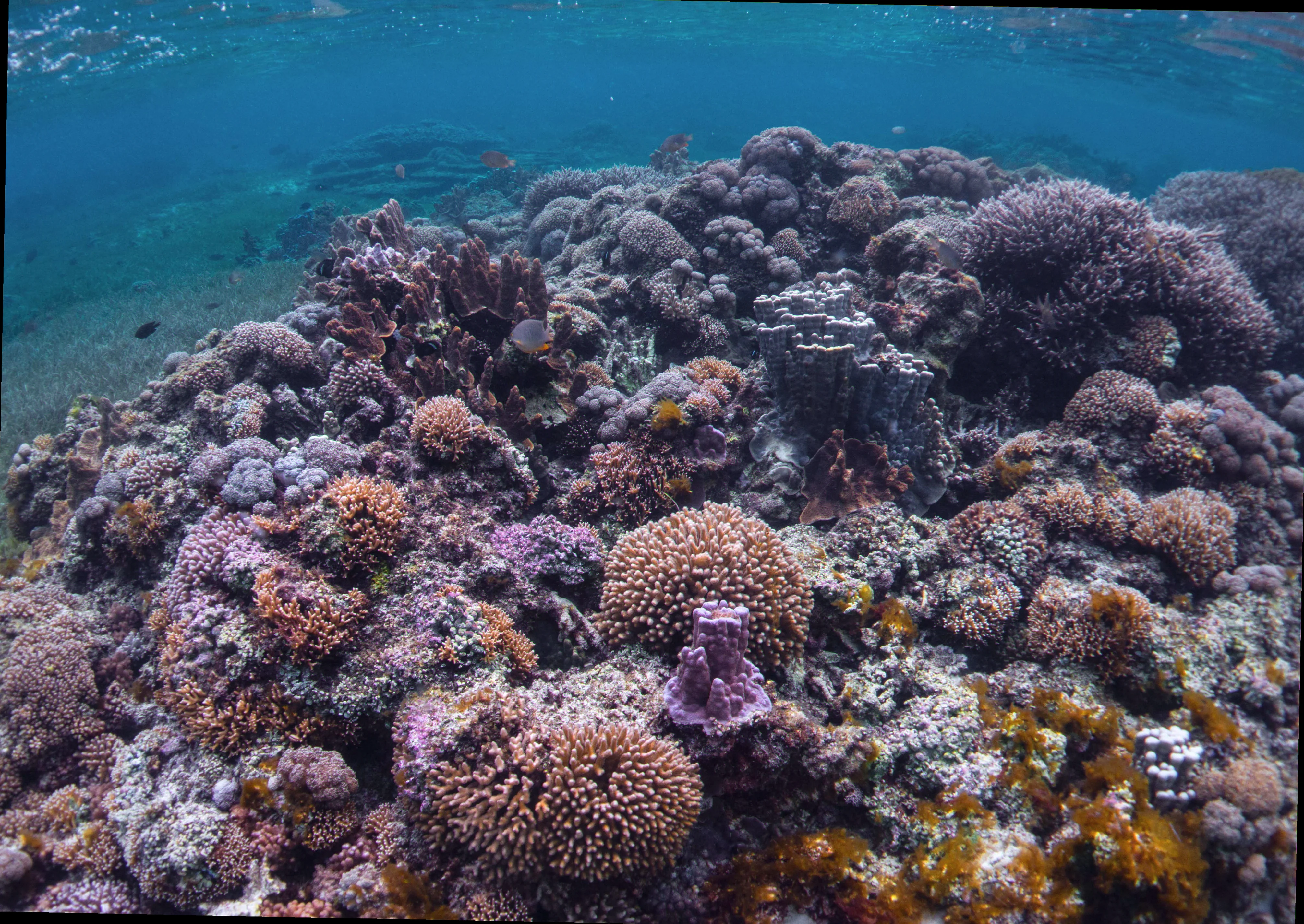
Field impression: Descending into the sapphire embrace off Lord Howe, the initial chill gives way to a vibrant, living warmth. The sensory overload is immediate: a kaleidoscope of colours - electric blues, fiery oranges, deep purples - pulses beneath the surface, a testament to thriving life. The air bubbles from your regulator are almost drowned out by the symphony of the reef: the incessant crackle of snapping shrimp, the surprisingly loud crunch of parrotfish grazing, and a myriad of subtle groans and clicks from a thousand unseen creatures. There's a subtle, clean oceanic scent, far removed from the stagnant smell of a stressed system, confirming that this is an ecosystem at its peak vitality.
How to Identify coral reef health Lord Howe Island
| Feature | What to Look For |
|---|---|
| Overall structure | High rugosity (complexity), diverse growth forms including massive, branching, and plate corals. Excellent structural integrity with minimal evidence of recent physical damage or bioerosion. |
| Colouration | Vibrant, diverse colour palette across coral colonies (deep browns, greens, blues, purples, oranges), indicating healthy zooxanthellae populations. Absence of widespread pallor, bleaching, or uniform algal overgrowth. |
| Size compared to common object | Average coral colony size robust and substantial; massive Porites heads often exceeding 2-3 metres in diameter, comparable to a small car. Branching Acropora thickets can cover areas the size of a small living room. |
| Voice / sound | A rich, persistent acoustic soundscape dominated by the crackling of snapping shrimp (family Alpheidae), the rasping scrapes of parrotfish (family Scaridae) grazing, and various fish vocalisations. A healthy reef is audibly "noisy." |
| Tracks / signs | Clean, sediment-free coral surfaces and substratum. Visible grazing scars on macroalgae from abundant herbivores. Diverse invertebrate trails (e.g., sea cucumbers, gastropods) on sandy patches, indicating active bioturbation. |
Where and When to Find It
Observing peak coral reef health around Lord Howe Island is best achieved during periods of calm seas and excellent visibility, typically from October through May, when water temperatures are conducive to optimal coral growth and diversity. The island's unique position as the world's southernmost coral reef, influenced by both tropical and temperate currents, creates a fascinating blend of species. Prime locations include the sheltered waters of the Lord Howe Island Lagoon, particularly around Ned's Beach and Old Settlement Beach, where extensive coral gardens thrive. For the more experienced diver, the outer reef slopes and pinnacles, such as those around Comet's Hole or the Malabar area, showcase impressive hard coral communities and a greater diversity of pelagic species. Optimal viewing is generally mid-morning to early afternoon when sunlight penetration is maximal, enhancing coral colours. Observing healthy reef dynamics is possible year-round, but water clarity can vary with weather patterns.
Behaviour Worth Watching
- Unique behaviour 1: Grazing Halos around Reef Patches: A subtle but powerful indicator of robust reef health is the presence of distinct "grazing halos" around isolated coral bommies or patches of hard coral, particularly in sandy or rubble areas. These halos, often 1-2 metres wide, are areas of meticulously cropped, almost bare substratum surrounding the coral. They are meticulously maintained by herbivorous fish, primarily parrotfish and surgeonfish, which venture out from the safety of the coral structure to graze on nascent algae. This intense, localised herbivory prevents algal overgrowth on nearby corals and signifies a healthy population of grazers, critical for reef resilience against algal competition.
- Unique behaviour 2: Synchronised Mass Spawning Events: While notoriously difficult to predict and observe, the synchronous mass spawning of corals is a pinnacle indicator of a mature, thriving reef ecosystem. Typically occurring a few nights after the full moon during warmer months (often November to February around Lord Howe, though timing can vary), vast numbers of coral colonies across multiple species release their gametes simultaneously into the water column. Witnessing the "snowstorm" of tiny egg and sperm bundles rising from the corals, forming iridescent slicks on the surface, confirms a highly fecund and reproductively active coral population, essential for future reef propagation and genetic diversity.
- Social structure: Coral reefs epitomise complex social and symbiotic structures. Corals themselves are colonial organisms, forming vast, interconnected structures. The reef community operates as a highly integrated meta-ecosystem, featuring intricate food webs, mutualistic relationships (e.g., clownfish and anemones, gobies and snapping shrimp), and competitive interactions for space and resources. This intricate web of interdependencies is a hallmark of a healthy, resilient system.
- Defensive display: A healthy reef exhibits a range of defensive behaviours from its inhabitants. Coral polyps rapidly retract into their skeletons when disturbed or threatened, protecting their delicate tissues. Many fish species display elaborate threat postures, such as flaring fins or rapid colour changes, to deter rivals or predators. For instance, the Lord Howe Island Clownfish (Amphiprion latezonatus) will aggressively defend its host anemone from perceived threats, nipping at intruders.
- Activity pattern: Lord Howe's coral reef is a perpetually active ecosystem, demonstrating pronounced diurnal and nocturnal shifts. During the day, the reef buzzes with the activity of herbivorous fish, planktivores, and visual predators. As dusk settles, a dramatic "changing of the guard" occurs: diurnal species seek shelter, while nocturnal predators (e.g., sharks, moray eels, octopus) emerge to hunt, and many coral polyps extend their tentacles to capture plankton under the cover of darkness. This 24-hour cycle of activity reflects a balanced predator-prey dynamic and efficient resource utilisation within the healthy reef.
Ecological Role in the Australian Landscape
The coral reefs of Lord Howe Island, though geographically isolated, play a profoundly significant and multifaceted ecological role within the Australian marine landscape, disproportionate to their relatively small area. Foremost, they serve as critical biodiversity hotspots, supporting over 90 species of coral and more than 500 species of fish, including many endemic species like the Lord Howe Island Angelfish (Chaetodontoplus conspicillatus). This rich biodiversity acts as a living gene bank for both tropical and temperate marine life. Mechanistically, the extensive calcium carbonate skeletons of healthy corals create complex three-dimensional structures, providing vital habitat, shelter, and nursery grounds for countless marine organisms, from tiny invertebrates to juvenile fish and sharks. This structural complexity is crucial for coastal protection, acting as natural breakwaters that dissipate wave energy, reducing erosion on the island's shores. Furthermore, healthy reefs contribute significantly to nutrient cycling, with corals and their symbiotic algae (zooxanthellae) efficiently recycling nutrients within the system. The calcification process undertaken by corals also represents a significant mechanism for carbon sequestration on a local scale, removing dissolved inorganic carbon from the water. The reef's health directly underpins a sustainable tourism industry for the island, attracting visitors globally and thus providing economic value to its preservation.
Lookalikes and How to Tell Them Apart
When assessing "coral reef health" at Lord Howe, it's crucial to distinguish it from two common states of degradation that can sometimes be mistaken for natural variation by the untrained eye:
Bleached Reef: A bleached reef is often uniformly white, pale yellow, or light blue, lacking the vibrant, diverse colouration of a healthy reef. This appearance is due to the expulsion of symbiotic zooxanthellae from the coral tissues, typically triggered by elevated water temperatures or other stressors. While a healthy reef might have patches of naturally pale coral species, widespread bleaching affects multiple species across a large area. The key distinguishing feature is the uniformity of the pallor and the absence of the characteristic brown, green, or purple hues that zooxanthellae impart to healthy corals.
Algae-Dominated Reef (Phase Shift): An algae-dominated reef appears smothered by extensive growth of turf algae (short, dense algal mats) or macroalgae (larger, fleshy seaweeds) over coral skeletons and substratum. This is often accompanied by reduced coral cover, a lack of visible grazing activity by herbivorous fish, and sometimes murkier water due to suspended organic matter. A healthy reef will have clean coral surfaces with minimal algal growth, maintained by abundant grazers. The distinguishing feature here is the prevalence of algae over live coral tissue and a noticeable reduction in the structural complexity typically provided by robust coral colonies, indicating a fundamental shift in the ecosystem's dominant primary producers.
Conservation Notes for the Field Naturalist
The coral reef health of Lord Howe Island, despite its protected status within a UNESCO World Heritage site, faces significant threats. While currently considered relatively healthy compared to many global reef systems, especially with its unique mix of tropical and temperate species, the long-term trend remains vulnerable. The primary key threatening process is climate change, manifesting as rising ocean temperatures leading to coral bleaching events, and ocean acidification which reduces corals' ability to build and maintain their skeletons. Localised threats include potential impacts from visitor pressure, marine debris, and the risk of invasive species. As a citizen-scientist, your observations are invaluable. Report any unusual sightings such as widespread coral