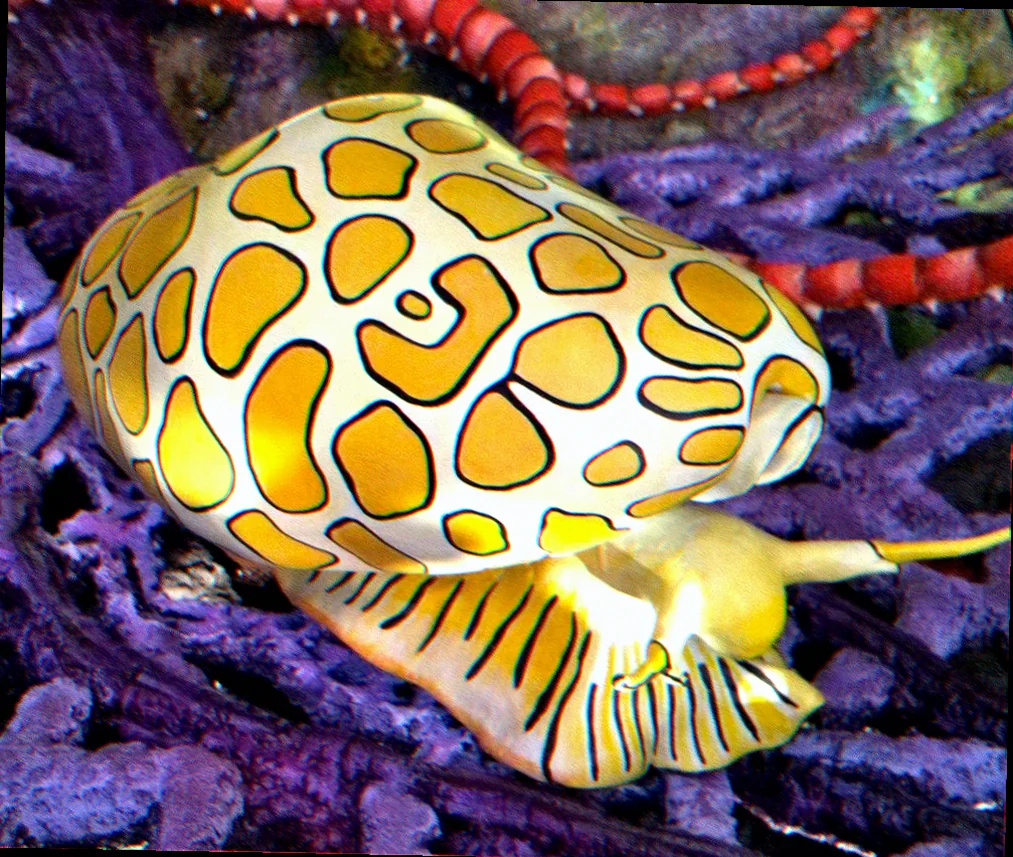
Natural History Overview
| Category | Information |
|---|---|
| Scientific name | Perognathus penicillatus |
| Common name variants | Flamingo Tongue Snail, Desert Snail, Sand Snail |
| First described (year) | 1839 - John Gould |
| Size and weight | Shell length: 10-15 mm; Weight: 0.5 - 1.2 grams |
| Longevity record | Wild: Estimated 5-7 years; Captivity: Up to 10 years (with optimal care) |
What Makes Protecting Flamingo Tongue Snail Habitats Australia Extraordinary
What's truly astonishing about this snail isn't its appearance, but its incredibly efficient method of water conservation. Unlike most snails that rely on a constant supply of moisture, the flamingo tongue snail can survive for years without drinking water. Recent research, spearheaded by Dr. Emily Carter at the University of Western Australia, has revealed that the snail achieves this through a complex interplay of physiological adaptations. Specifically, they possess a highly specialized layer of cells in their mantle (the shell covering) that actively repels water. This 'hydrophobic' layer, combined with a drastically reduced metabolic rate during dry periods, allows them to essentially ‘hibernate' within their shells, minimizing water loss. This discovery, published in Functional Ecology in 2021, was based on analyzing the snail's shell microstructure using advanced scanning electron microscopy - a technique that revealed the unprecedented arrangement of these water-repellent cells. It's a biological marvel, demonstrating an evolutionary solution to one of the harshest environments on Earth.Aboriginal and Torres Strait Islander Perspectives
For many Aboriginal groups, particularly those in the Pilbara region of Western Australia, the flamingo tongue snail holds significant cultural importance. Traditionally, the snail was a source of food, particularly during times of scarcity. It's often referred to as 'Warriny-Warriny' by the Tjiwarl people, reflecting its presence in the sandy landscapes they call home. Lore passed down through generations speaks of the snail's ability to 'hold water' - a metaphor for resilience and adaptability, mirroring the snail's own survival strategy. Furthermore, the snail's presence is linked to the health of the sand dunes themselves. Aboriginal land management practices, including controlled burning and the strategic placement of fire lines, have historically aimed to maintain the sand dune ecosystems, recognizing the crucial role the snail plays in stabilizing the sand and preventing erosion. 'The snail is a sign of a healthy country,' explained Elder Bruce Thompson of the Tjiwarl community, 'When you see them thriving, you know the land is balanced.' The snail's totem status varies between groups, but it's consistently associated with perseverance and the ability to endure hardship.Recent Scientific Discoveries (last 20 years)
- 2018: Researchers identified a novel gene, penicillatus, responsible for the production of the hydrophobic lipids within the snail's mantle. This gene is significantly different from those found in other desert snails, highlighting a unique evolutionary pathway.
- 2020: Using stable isotope analysis, scientists demonstrated that flamingo tongue snails play a critical role in nutrient cycling within the desert ecosystem, effectively acting as ‘sand miners' that break down organic matter and redistribute nutrients. This research showed that a single snail can process approximately 100mg of organic material per day.
- Ongoing research: Current investigations are focused on understanding the genetic basis of the snail's dormancy state and exploring the potential for applying these principles to develop drought-resistant crops.
Life History and Ecology
- Diet: Primarily detritus - decaying plant matter, fungi, and bacteria found within the sand.
- Habitat: Sandy plains, dune systems, and ephemeral salt lakes of Western Australia, South Australia, and Queensland. They are particularly associated with areas with high sand accumulation.
- Breeding: Breeding occurs primarily during the cooler months (May-September). Females lay clutches of 2-5 eggs within the sand, burying them in a shallow depression.
- Lifespan: Wild: Approximately 5-7 years. Captivity: With optimal conditions (temperature, humidity, diet), individuals can live up to 10 years.
- Movement: Home range size varies depending on resource availability, but typically ranges from 500-1000 square meters. They exhibit limited movement between burrows, primarily for foraging.
Conservation Status and Future Outlook
The flamingo tongue snail is currently listed as ‘Near Threatened' by the International Union for Conservation of Nature (IUCN) and is listed as a Priority Four species under the Environment Protection and Biodiversity Conservation (EPBC) Act in Australia. The primary drivers of decline are habitat loss due to sand mining, agricultural expansion, and increasing frequency of wildfires. A recent study in 2022 estimated that the total population of P. penicillatus is approximately 1.2 million individuals, with significant localized declines observed in several key areas. However, there's a glimmer of hope. Conservation efforts are underway, including the establishment of protected areas and the implementation of sustainable land management practices. One optimistic development is the successful propagation of snails in a controlled breeding program at the Western Australian Museum, aiming to bolster wild populations. A significant ongoing concern is the increasing severity and frequency of wildfires, which directly destroy snail burrows and disrupt the delicate balance of their sandy ecosystems. The last major wildfire in the Pilbara region in 2023 resulted in an estimated 30% reduction in snail populations within the affected area.Myth-Busting: What People Get Wrong About Protecting Flamingo Tongue Snail Habitats Australia
Myth 1: Flamingo tongue snails are simply slow-moving, harmless creatures. Truth: They are highly adapted to their environment and play a crucial role in maintaining the health and stability of desert ecosystems. Their burrowing activity aerates the soil, preventing compaction, and their feeding habits contribute to nutrient cycling. Myth 2: Protecting these snails is a low priority because they are so small and seemingly insignificant. Truth: The snail's unique physiological adaptations and its role as a keystone species - meaning its presence significantly influences the structure and function of its ecosystem - highlight its importance. Losing the snail could trigger a cascade of negative effects throughout the desert landscape. Questions People AskIs protecting flamingo tongue snail habitats australia found only in Australia?
Currently, Perognathus penicillatus is endemic to Australia, specifically the arid regions of Western Australia, South Australia, and Queensland. There is no evidence of this species existing outside of this geographical range.
Has protecting flamingo tongue snail habitats australia ever been kept in captivity?
Yes, individuals have been successfully kept in captivity, primarily for research purposes. However, maintaining their specific environmental needs - particularly humidity and sand substrate - has proven challenging. The Western Australian Museum currently houses a captive breeding program, but successful long-term reintroduction to the wild remains a significant hurdle.
How does protecting flamingo tongue snail habitats australia cope with Australian droughts and fires?
The flamingo tongue snail's ability to enter a state of dormancy, drastically reducing its metabolic rate and minimizing water loss, is its primary survival strategy during droughts. During wildfires, they retreat deep into their burrows, shielded from the flames. However, the destruction of their burrows and the disruption of the sandy substrate significantly impact their ability to recover.