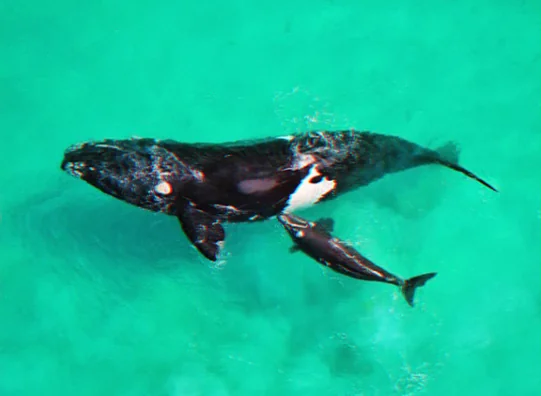
Ecological significance: Southern right whale calving season in South Australia represents a crucial node within the Southern Australian Benthic Zone (SABZ) ecosystem. These majestic mammals, primarily engaging in calving and rearing their young in the nutrient-rich waters off the state's coastline, directly influence the abundance and distribution of their prey - primarily Antarctic krill ( Euphausia superba). Their presence stimulates the growth of phytoplankton, the base of the marine food web, and their feeding activities create localized nutrient hotspots. The disappearance of this calving aggregation would trigger a cascade effect, impacting krill populations, subsequently affecting predators like seabirds and seals, and ultimately altering the overall health and productivity of the SABZ, a region vital for commercially important fisheries and a significant breeding ground for numerous marine species.
Species Profile
| Attribute | Data |
|---|---|
| Scientific name | Eubalaena australis + (Various authorities, including Wilson & Taylor) |
| Trophic level | Apex Predator |
| Population estimate | Approximately 600-800 individuals, with a core population of around 400-500 breeding females. (Source: Department for Environment and Water, South Australia, 2023) |
| Native range | Southern Australia, New Zealand, and parts of South America. South Australia is currently the primary breeding ground for the Australian population. |
| EPBC Act status | Vulnerable |
Position in the Food Web
- Prey species: Southern right whales primarily consume Antarctic krill (Euphausia superba), which they filter feed on using their baleen plates. They also occasionally take small fish and squid, particularly during the calf-rearing period. Hunting method involves diving to depths of up to 300 meters and using their massive size to create currents that funnel krill into their mouths.
- Predators: The primary predator of adult southern right whales is the leopard seal (Hydrurga leptonyx), which occasionally ventures into the waters off South Australia, particularly targeting calves. Orcas (Orcinus orca) have also been observed interacting with southern right whales, though direct predation is less common.
- Competitors: Humpback whales (Megaptera novaeangliae) compete with southern right whales for access to krill resources, particularly during the calving season. Blue whales (Balaenoptera musculus) are also present in the area and compete for similar food sources.
- Symbiotic partners: Southern right whales exhibit a symbiotic relationship with certain species of copepods. These tiny crustaceans attach themselves to the whales' skin, feeding on dead skin cells and algae, effectively acting as a natural cleaning service.
- Keystone role: Southern right whales are considered a keystone species within the SABZ. Their foraging activities significantly influence krill distribution and abundance, which in turn affects the entire food web. Their presence also contributes to the physical structuring of the seabed through their movements and feeding, creating areas of increased nutrient availability.
Habitat Requirements and Microhabitat Use
Southern right whales are highly reliant on specific coastal habitats for calving and rearing their young. They typically congregate in sheltered bays and inlets with relatively shallow, sandy or muddy bottoms. The Investigator Strait and Spencer Gulf in South Australia are the most important calving grounds, offering protection from strong currents and waves. These areas are characterized by a relatively stable water temperature (typically 14-18°C) and a high concentration of phytoplankton, providing a rich food source for krill and, subsequently, the whales. The bioregion of the Adelaide and Mount Lofty Plain, combined with the coastal marine environments, supports this critical habitat. Specific microhabitats include areas with seagrass beds, which provide refuge for juvenile whales and krill, and sandbanks that concentrate krill populations. The seabed substrate is predominantly sandy or muddy, with varying levels of organic matter. The water regime is influenced by seasonal rainfall patterns, with higher rainfall leading to increased freshwater input and potentially altering salinity levels, which can impact whale distribution.Reproductive Strategy and Population Dynamics
Southern right whales exhibit a K-selected reproductive strategy, meaning they have a low reproductive rate and invest heavily in the survival of their offspring. Females typically give birth every 2-3 years. Breeding triggers are primarily linked to rainfall patterns, with increased rainfall correlating with higher krill abundance and, consequently, increased calving rates. Photoperiod (day length) also plays a role, with breeding activity peaking during the autumn and winter months. Juvenile survival rates are relatively low, with approximately 30-40% of calves surviving to adulthood. Population growth is limited by several factors, including low reproductive rates, high mortality rates (particularly among juveniles), and the slow rate of population recovery. The species is highly susceptible to disturbance during the calving season, which can significantly reduce reproductive success. Competition for resources, particularly krill, also plays a significant role in limiting population growth.Threats and Vulnerability Analysis
- Introduced species pressure: The introduced Australian fur seal (Arctocephalus australis) poses a significant threat to southern right whale calves, often harassing and preying on them.
- Land-use change: Increased coastal development, including port expansions and aquaculture operations, can disrupt whale habitats and increase the risk of ship strikes.
- Climate projections: Warming ocean temperatures and altered rainfall patterns are predicted to negatively impact krill populations, reducing the availability of food for southern right whales. By 2050, models suggest a potential 10-20% decline in krill biomass in the SABZ, directly impacting whale foraging success. Increased frequency of marine heatwaves could also lead to coral bleaching, further reducing habitat complexity and food availability.
- Disease: While not currently a major threat, there is concern about the potential for emerging diseases to impact southern right whale populations.
Recovery Actions and Research Gaps
Existing recovery plans include the establishment of marine protected areas within the Investigator Strait and Spencer Gulf, aimed at minimizing disturbance during the calving season. There are currently no captive breeding programs for southern right whales. Translocation projects have been attempted in the past, but have not been successful in establishing self-sustaining populations outside of South Australia. A critical data gap is a comprehensive understanding of the genetic diversity within the Australian population. Researchers need to conduct detailed genetic analyses to assess the level of connectivity between different subpopulations and identify any potential bottlenecks in the gene pool. Furthermore, long-term monitoring of whale movements, foraging behavior, and krill abundance is crucial for assessing the effectiveness of conservation efforts and adapting management strategies as needed.
Ecological FAQ
Why is southern right whale calving season south australia important to its ecosystem?
Southern right whales are a keystone species, fundamentally shaping the structure and function of the Southern Australian Benthic Zone. Their foraging activities drive the distribution and abundance of Antarctic krill, the dominant species in this ecosystem. This, in turn, supports a complex food web, including seabirds, seals, and numerous fish species. The whales' movements also create localized nutrient hotspots through their feeding, stimulating phytoplankton growth and contributing to overall ecosystem productivity. Without their presence, the SABZ would experience a significant decline in krill populations, leading to cascading effects throughout the food web and a reduction in overall ecosystem health.
How has the southern right whale calving season south australia population changed over the last 50 years?
The southern right whale population in South Australia has undergone a remarkable recovery following a period of severe decline in the 20th century. Estimates suggest that the population increased from approximately 50 individuals in the 1950s to over 600 today. This dramatic increase is largely attributed to the establishment of marine sanctuaries and restrictions on human activities within the calving grounds. However, the population remains vulnerable to ongoing threats, and continued monitoring and management are essential to ensure its long-term survival.
What can individuals do to support southern right whale calving season south australia conservation?
Individuals can contribute to conservation efforts in several ways: support sustainable seafood choices to reduce pressure on krill populations; reduce their carbon footprint to mitigate climate change impacts; avoid using sonar or other noise-generating technologies near whale habitats; and support organizations dedicated to whale research and conservation. Educating yourself and others about the importance of southern right whales and their habitat is also crucial. Finally, when visiting the Investigator Strait and Spencer Gulf, adhere to responsible whale watching guidelines - maintain a safe distance, avoid disturbing the whales, and follow the instructions of experienced guides.