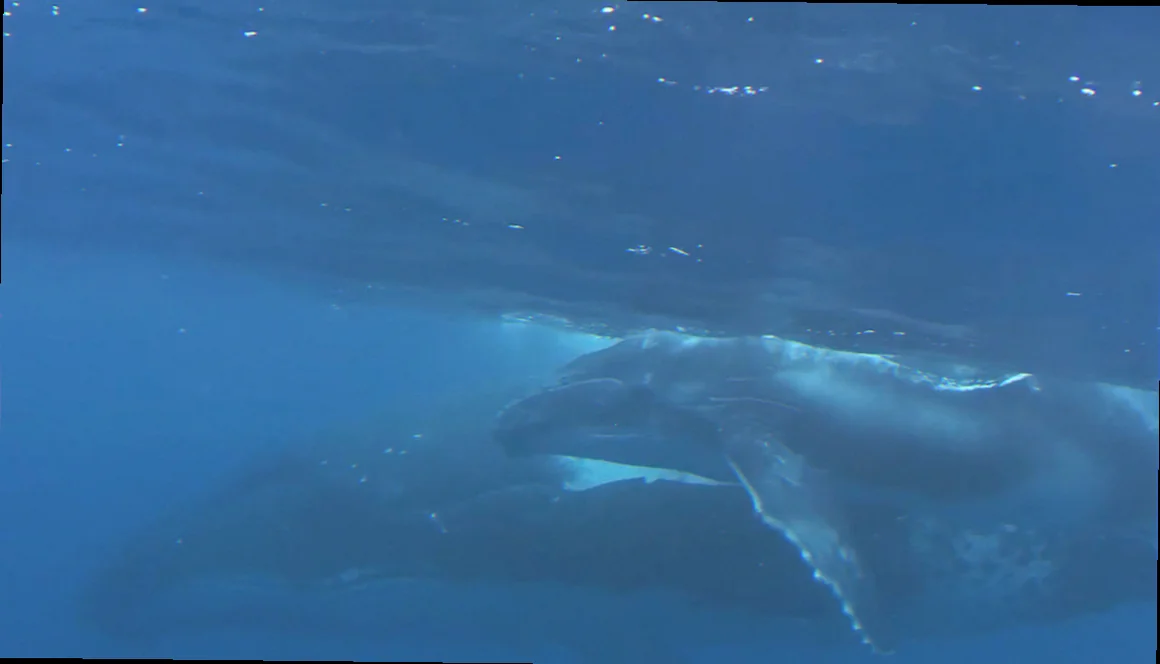
Field impression: The air over the Exmouth Gulf carries the heavy, metallic scent of sun-baked salt flats and the sharp tang of mangrove mud, suddenly punctuated by a crystalline mist rising from the turquoise pane of water. In the stillness of the Gascoyne heat, the thunderous "whuph" of a Humpback calf's blow echoes against the red limestone cliffs of the Cape Range, a sound that signals the profound sanctuary of these shallow, sheltered reaches. It is a landscape of immense scale where the desert's red sand literally bleeds into a marine nursery of global significance.
How to Identify protecting exmouth gulf whale nursery habitats
| Feature | What to Look For |
|---|---|
| Body shape | The primary inhabitant, the Humpback Whale (Megaptera novaeangliae), features a robust, stocky body with a distinct hump in front of the small dorsal fin and exceptionally long, wing-like pectoral fins. |
| Colouration | Dorsal surfaces are charcoal to black; the underside of the tail flukes and pectoral fins often feature unique white patterning used for individual identification. |
| Size compared to common object | An adult female is roughly the length of a standard articulated city bus (14-16 metres), while a newborn calf is about the size of a Toyota LandCruiser. |
| Voice / sound | In the Gulf, the sound is characterized by low-frequency moans and "thops" rather than the complex songs of the breeding grounds, as mothers maintain quiet contact with calves. |
| Tracks / signs | "Whale footprints" or slicks-circular patches of calm water created by the vertical movement of the whale's tail-and the massive, explosive breaches that can be seen from several kilometres away. |
Where and When to Find It
The phenomenon of protecting exmouth gulf whale nursery habitats is most visible between August and November each year. During this window, Group IV Humpback whales migrating south from their Kimberley calving grounds enter the Gulf to rest. The highest concentrations are found in the southern and eastern portions of the Gulf, particularly around the "Bay of Rest" and the shallow shoals near Giralia Station. These waters are typically less than 20 metres deep, providing a thermal and acoustic refuge. The best time for observation is during the morning "glass-off" when the surface is mirror-like, usually before the south-westerly "sea breeze" kicks in around 2:00 PM. This habitat is a critical component of the Ningaloo-Exmouth Gulf bioregion in Western Australia.
Behaviour Worth Watching
- Acoustic Sheltering: One of the most specific and rarely documented observations in the Gulf involves "whispering." Mothers and calves communicate at significantly lower decibel levels than whales in the open ocean. By utilizing the shallow bathymetry and the acoustic "shadow" of the Gulf's complex coastline, they prevent their vocalizations from travelling into deeper water where transient orcas (Orcinus orca) patrol, effectively hiding through silence.
- Pectoral Slap Syncing: Observers may witness a calf mimicking the exact frequency and rhythm of its mother's pectoral fin slaps. This is not merely play; it is believed to be a form of "resistance training" where the calf builds muscle tone in the buoyant, low-current environment of the Gulf to prepare for the arduous 5,000-kilometre journey back to Antarctic feeding grounds.
- Social structure: Primarily mother-calf pairs, often accompanied by an "escort" male. These groups are temporary and focused entirely on the calf's growth and protection.
- Defensive display: If a predator or vessel approaches too closely, a mother will often position her own body between the intruder and the calf, using her massive fluke to create a "bubble curtain" or slapping the water violently to deter the threat.
- Activity pattern: Diurnal resting and crepuscular travelling. The whales are often seen "logging" (floating motionless at the surface) during the heat of the day to conserve energy while the calves suckle.
Ecological Role in the Australian Landscape
Protecting exmouth gulf whale nursery habitats serves as a massive nutrient pump for the Gascoyne marine ecosystem. As Humpback whales fast during their migration, they rely on stored blubber, but they continue to metabolize and release nitrogen and iron-rich urea and faecal matter into the Gulf. This "whale pump" effect stimulates primary productivity in the form of phytoplankton blooms, which in turn supports the local prawn, pearl oyster, and finfish industries. Furthermore, the Gulf acts as a carbon sink; the sheer biomass of whales resting here represents a significant temporary sequestration of carbon. The interaction between the whales and the surrounding mangals (mangrove forests) creates a unique nutrient exchange that maintains the health of the entire eastern side of the Exmouth Gulf.
Lookalikes and How to Tell Them Apart
The Southern Right Whale (Eubalaena australis) is occasionally seen in the area but can be distinguished by its lack of a dorsal fin and the presence of white "callosities" (rough skin patches) on its head. Another lookalike is the Bryde's Whale (Balaenoptera edeni), which is much sleeker and faster-moving; it can be identified by the three longitudinal ridges on the top of its head, whereas the Humpback has a single ridge covered in fleshy tubercles.
Conservation Notes for the Field Naturalist
The population of Humpback whales in Western Australia has recovered significantly since the end of whaling, but protecting exmouth gulf whale nursery habitats remains a priority due to emerging industrial threats. Key threatening processes include industrial noise from proposed deep-water ports, which can mask the quiet communications between mothers and calves, and increased vessel traffic leading to ship strikes. Citizen-scientists can contribute by using apps like "WhaleLog" to record sightings and behaviours. Monitoring the health of the Gulf's benthic habitats-the seagrasses and mangroves-is just as important as monitoring the whales themselves, as these features provide the calm conditions the nursery requires.
Common Questions from Observers
What does protecting exmouth gulf whale nursery habitats eat and how does it hunt?
Adult Humpbacks in the Exmouth Gulf are generally fasting. They rely on the massive blubber reserves built up in the Antarctic. While they may occasionally opportunistic-feed on small schools of baitfish or tropical krill using "bubble-netting" techniques, their primary focus in the Gulf is energy conservation. The calves, however, "hunt" for their mother's milk, which is roughly 40-50% fat, allowing them to gain up to 60 kilograms of weight per day.
Is protecting exmouth gulf whale nursery habitats nocturnal?
Whales are active 24 hours a day, but their behaviour shifts at night. During the nocturnal hours, mother-calf pairs often move into even shallower waters (less than 10 metres) to avoid the nocturnal hunting patterns of large sharks and orcas that may move into the Gulf under the cover of darkness. This movement is a thermoregulatory and defensive strategy tied to the tidal cycles of the Gascoyne.
Can protecting exmouth gulf whale nursery habitats be found in suburban gardens?
While obviously not found in gardens, the "urban" interface of Exmouth town is unique. During the peak of the season, residents can often see breaches and blows from their front porches or the local yacht club. The proximity of this wild nursery to the human settlement of Exmouth highlights the need for strict light and noise pollution controls to ensure the whales are not displaced from their near-shore resting zones.